If we consider Google Translate (NMT) to be the third generation, then machine translation based on large language models (LLMs) can be called the 4th Gen.
A key feature of the 4th Gen is that, compared to the third generation, it can easily learn certain rules for translating "terms" and "phrases."
In that respect, the 4th Gen is very similar to the 1st generation (rule-based) machine translation.
The third generation also had features like glossaries and, in the case of Google Translate, transfer learning methods such as AutoML, which allowed for customization to suit a company's preferences. However, the side effects were often too significant, frequently leading to a decline in translation quality. The glossary feature could only be used for nouns, and the transfer learning (AutoML) approach was also overly complicated. Moreover, it was hard to say that it was effective.
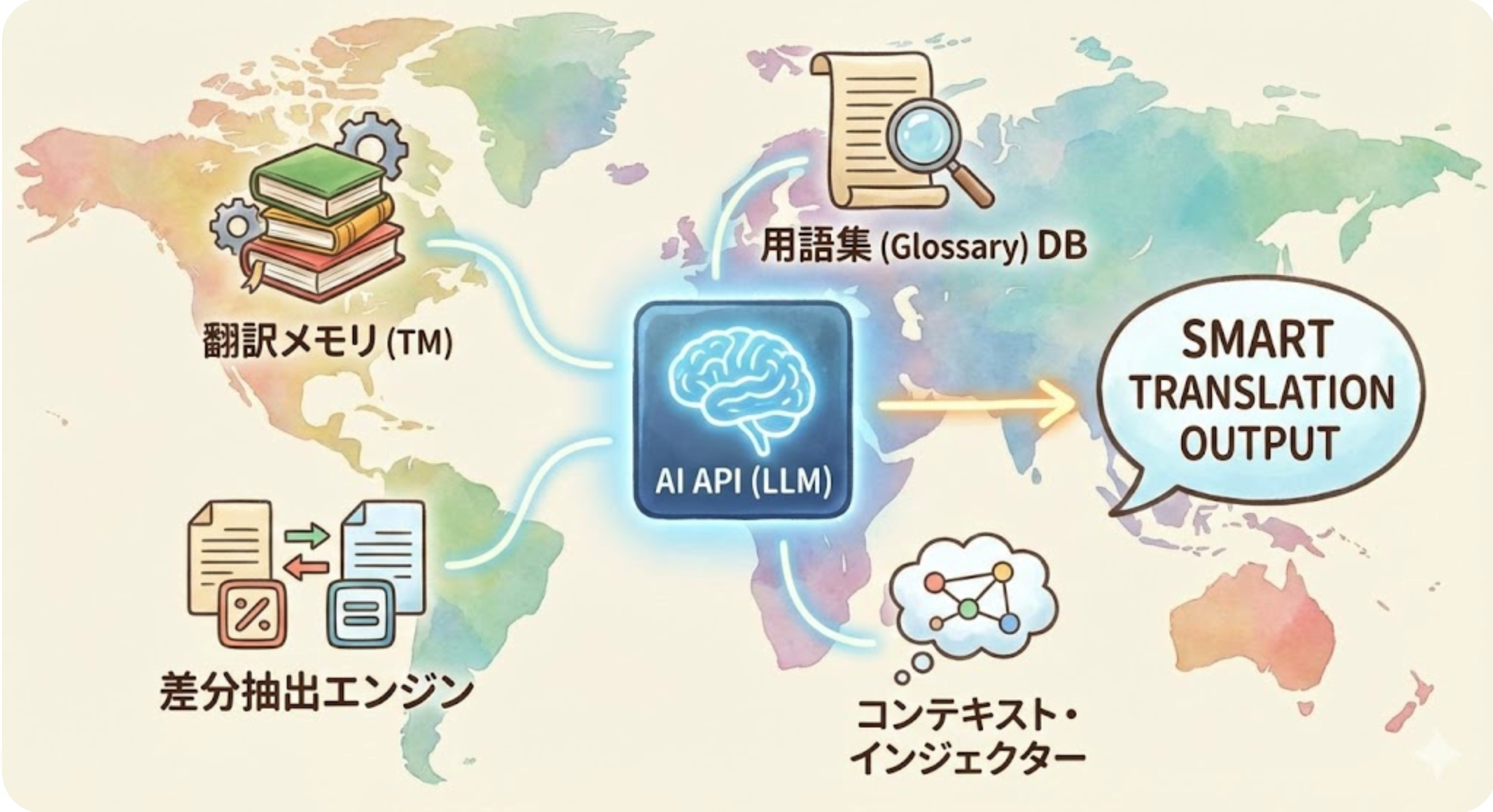
With the 4th Gen, you can simply register rules for how to translate terms and phrases into the system, and because it is based on a large language model, you can define these rules in the same way you would give instructions to a human.
For example, let's say you want to translate "製品" as "product." You would register this in the dictionary, but in the third generation, the translation "product" would be fixed as a string, so it wouldn't be inflected for the plural form, nor would it be capitalized as "Product" when used in a heading. With the 4th Gen, it will handle the necessary inflections for you.
The 4th Gen has made it possible for individual translators to train machine translation at a personal level. In the 1st generation of rule-based machine translation, individual translators would purchase machine translation software, painstakingly register terms in the dictionary, and try to improve the machine translation results themselves (although this was a labor-intensive and largely fruitless effort). You can do the same thing with the 4th Gen.
With the 4th Gen, you can also register glossaries and even add translation memories (TM) from your past translation assets. You can even register phrase-level translations. And the base translation quality itself is quite good. It is possible to improve machine translation without any side effects.
A generational shift in machine translation and machine translation typically occurs about every 10 years. In 10 years, the fifth generation will likely appear, but it is impossible to imagine what it will look like.
However, over the next 10 years, the 4th Gen of machine translation will undoubtedly take center stage.