As a legendary motorsports venue, Suzuka Circuit attracts motorsports fans from across Japan and around the world. Its global reputation is well established, and as international visitors have returned following the pandemic, providing information in multiple languages has become increasingly important.
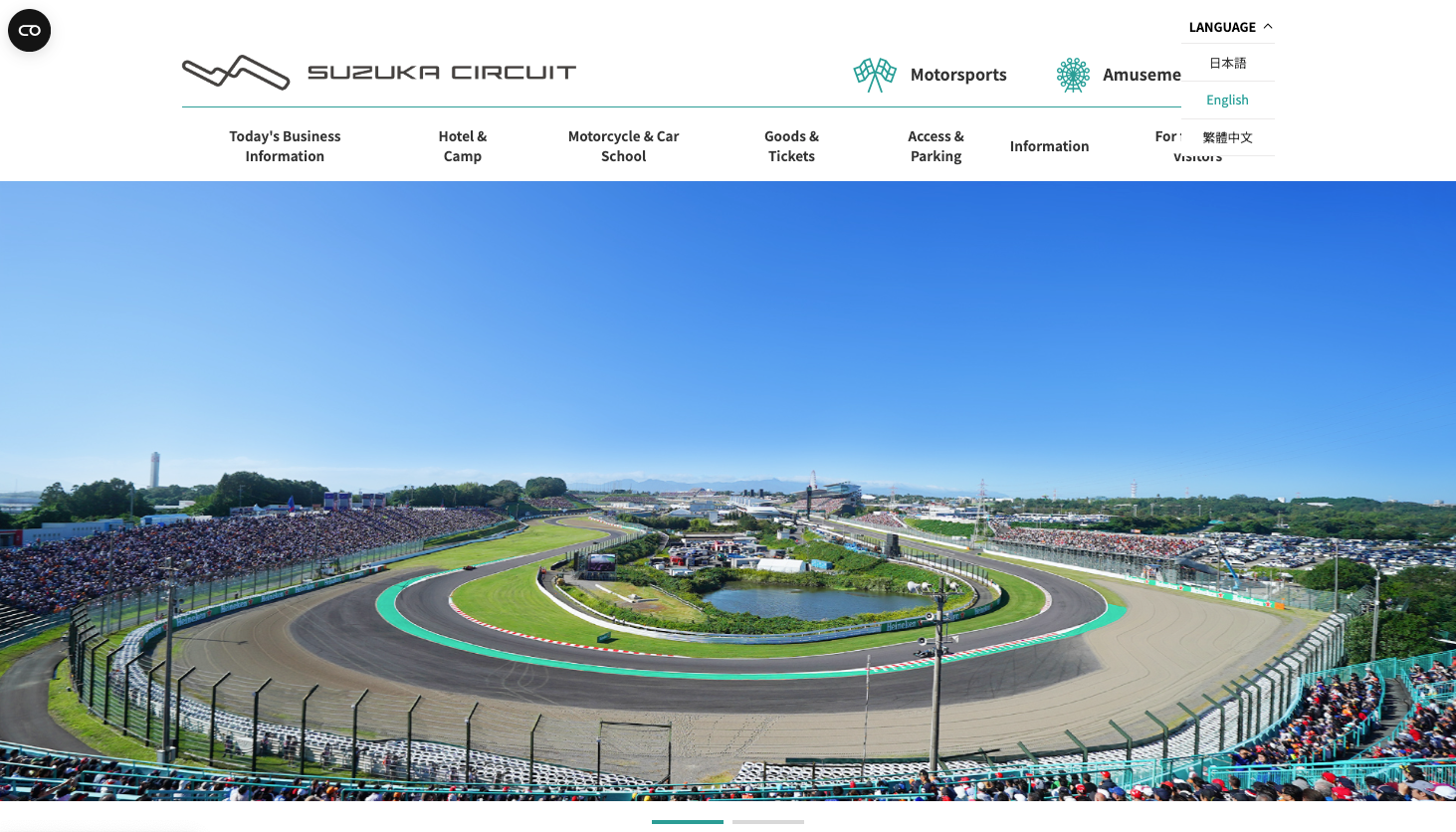
Previously, our English and Traditional Chinese websites were managed manually. Now, they are powered by Cistate Translation Proxy, our automated website multilingual solution. In this article, we speak with the website manager at Honda Mobilityland Co., Ltd. Suzuka Circuit about the challenges they faced in managing a multilingual website, the reasons behind adopting an automated solution, and how operations have changed since its implementation.
As this is a world-renowned circuit, we have long welcomed many visitors from overseas. Since the COVID-19 pandemic, have you personally noticed any changes in the number of customers coming from overseas?
First of all, before the COVID-19 pandemic, we welcomed many visitors from overseas. In addition to race events like F1 that attract visitors from all over the world, we have also operated facilities such as an amusement park, hotel, and restaurants since our founding, and these have also seen a significant increase in visitors, especially from Asia. Until the beginning of 2020, things were steadily improving, but due to the COVID-19 pandemic, the numbers dropped to almost zero. As a result, we decided to temporarily pause work on our foreign language websites.
After the COVID-19 pandemic ended, the number of visitors from overseas gradually increased, and especially since the beginning of 2024, there has been a sharp rise. As a result, there is now a growing demand for more information, higher quality, and faster updates when sharing content on foreign language websites.
You mentioned that foreign language pages were managed manually. At that time, were you manually maintaining the same content as the Japanese pages?
Since the Japanese site has a large number of pages and a lot of content, we would select information from the Japanese pages and manually create the foreign language sites. As a result, the amount of information on the foreign language sites was about one-fifth that of the Japanese site.
At that time, were the supported languages English and Traditional Chinese?
Yes, we introduced English in 2014 and Traditional Chinese in 2016. English is fundamental, but we also support Traditional Chinese to connect with clients in Taiwan and Hong Kong.
In 2016, a mobility-themed park called "Suzuka Circuit Park" opened in Kaohsiung, Taiwan, where our company provides licensing and operational consulting for Suzuka Circuit. One of the reasons for supporting Traditional Chinese is to use this facility as a way to encourage visitors to come to the Suzuka Circuit in Japan.
Another reason is that word of mouth in Hong Kong has spread about our facilities being ideal for families with young children to play together and stay for several days, which has led to an increase in visitors from Hong Kong.
What challenges did you face when manually managing English and Traditional Chinese?
This is the time lag before publication. Since a native check was required, there was always at least a one-week delay compared to the Japanese version, and typically it took about two weeks. In addition, there were also cost-related challenges. Even when creating content identical to the Japanese version, the translation and related work required extra effort, resulting in higher costs compared to Japanese. It was quite burdensome in terms of time, effort, and expenses.
At the time, machine translation was also an option. Did you consider using it?
Yes, we did consider it, but we determined that machine translation in the 2010s was still not at the level our company required, so we chose to use manual translation instead. In particular, there were specialized terms and expressions related to racing, and I believe that machine translation at the time struggled with those.
Now, let's move on to discuss the translation proxy you are currently using. When we first reached out to you, what were your expectations?
Just as the COVID-19 pandemic was coming to an end, our company was preparing to resume our efforts to support foreign languages and attract inbound visitors. We were considering resuming updates manually as we had done before, but after learning about translation proxy solutions, seeing real-world examples, and confirming the translation quality, we decided to consider it as an option.
As our company was just about to start initiatives targeting inbound business, we expected that implementing a translation proxy would require some time and cost. However, we believed the long-term benefits would outweigh these, so we decided to move forward with the implementation.
We initially used the translation proxy for special event pages. When using the event page at that time, were there any specific points you wanted to check or evaluate?
Although we had seen case studies and felt confident about the translation quality, we were still concerned about whether it would work smoothly on our own website during actual operation. However, once we began operational testing, we saw the expected performance and translation quality, which helped us gain trust within the company, and I believe the implementation proceeded smoothly.
Afterwards, they decided to implement it across the entire Suzuka Circuit website. Besides translation quality, what was the deciding factor for choosing our service?
Of course, translation quality was important, but the fact that it was easy to register terminology and edit text was also a major factor. While most of the work is handled by machine translation, there are still unique expressions that can't be fully captured. The fact that you offered an easy-to-use interface for registering terminology and editing text was a major deciding factor for us.
Another major factor is the difference in cost. Compared to before, the cost has been reduced to about one-tenth, so we are also considering adding more languages in the future.
Thanks to this, I can now allocate the time and effort I used to spend on creating foreign language websites to other tasks, which has been a huge help. As we are now focusing more on reaching inbound audiences, we expect that translation proxy technology will continue to be extremely useful for us moving forward.
After implementing the translation proxy, did you notice any changes, such as an increase in access or inquiries from overseas?
As we provide information in foreign languages at the same level as in Japanese for the first time, our website traffic is steadily increasing. However, we believe there is still significant potential to increase our international reach.
You have been using our translation proxy for some time now. Are there any features you have found particularly useful in your operations?
First, our staff can intuitively and easily proofread content themselves, since they have direct editing rights. Additionally, since we often have last-minute changes related to events, the translation proxy has been extremely helpful. It automatically pulls updated information from the Japanese content and translates it into other languages, allowing us to respond quickly to changes.
There are some unique aspects to our site’s structure and a large number of pages, so we did encounter a few minor issues during implementation. However, your team has responded quickly each time, and we are very satisfied.
Do you have any requests or expectations for our translation proxy in the future?
Compared to our previous manual operations, things have changed dramatically, and it feels like there are only positive aspects now. If anything, there are some issues with how the Japanese pages are structured, and in particular, some short sentences have been translated in unintended ways. With such a large number of pages, it's difficult to check every single one. It would be helpful if translations could automatically use words that fit naturally with the site's content.
While the proofreading process is already quite user-friendly, I think it would be even better to have a more intuitive user interface—something that allows new employees to get started with their tasks right away.
Additionally, expanding beyond just translation proxies to include web development, we're also considering whether we can integrate our translation system more closely with the original site creation process. Our company collaborates with multiple web development teams. While we do have unified rules, some teams use unique approaches to avoid making things too monotonous. We believe that by establishing a unified structure for our pages that works seamlessly with translation proxies, we can ensure that any newly added pages can also be translated smoothly. Regarding that matter, we hope to discuss and update the production guidelines together with your company moving forward.
Suzuka Circuit is known as a mecca for motorsports, attracting visitors from all over Japan and abroad. Could you tell us what makes it so appealing to so many people?
I believe there are two main reasons. One is motorsports such as racing, and the other is its role as a comprehensive leisure destination.
When it comes to racing, we host many top-tier events such as the Formula 1 World Championship and the Suzuka 8 Hours. In 2024, it will be 62 years since we opened, but the layout of the racing course has remained almost unchanged since its founding. Because the course is carved out of hilly terrain, there are significant elevation changes. The traditional layout also allows spectators to watch the action up close to the course. As an increasingly rare old-school type of circuit, we have received high praise from customers and drivers from around the world. Fortunately, we are recognized as a hub for motorsports, and we take pride in the achievements we have built up over the years, which we believe are not only valued in Japan but also resonate worldwide.
Another key feature is the amusement park, which opened in the second year after our founding, in 1963, originally under the name 'Automobile Amusement Park.' We've long embraced the idea of sparking children's interest in motorsports like cars and motorcycles by letting them interact and explore from a young age, so families can enjoy and connect with the world of motorsports together. To ensure a comfortable stay, we also offer amenities such as restaurants, hotels, and hot springs. We value creating experiences that everyone can enjoy together, from young children to the whole family.
Today, there are countless things and experiences available, but we take pride in our expertise in motorsports and amusement facilities. By valuing these two core elements, we hope to continue providing enjoyable experiences to customers both in Japan and around the world.
Suzuka Circuit https://www.suzukacircuit.jp/
Contact Information https://www.suzukacircuit.jp/contact_s/
TEL: 059-378-1111 (Main Line)
Business Hours: 9:30 AM – 6:00 PM
All you need is a URL. Cistate Translation Proxy: Easy Implementation with Minimal Effort
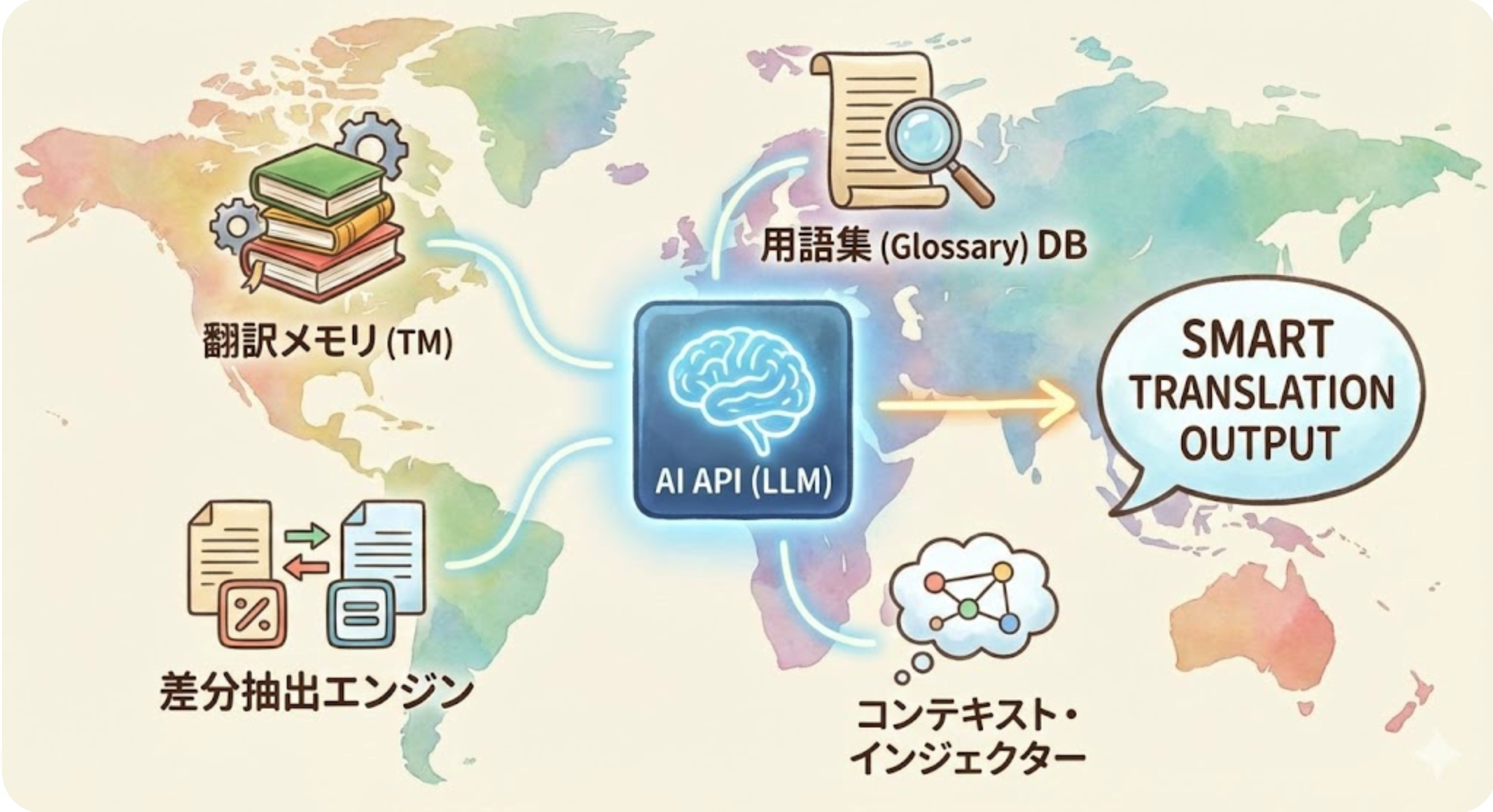
Cistate Translation Proxy is a system that directly retrieves information from publicly available websites and automatically builds and manages multilingual sites. By combining large language models with our proprietary natural language processing technology, we enable highly accurate automatic multilingualization of websites. For more details about Cistate Translation Proxy, please also see this page.
Contact Us About This Matter
+81-3-6878-5790